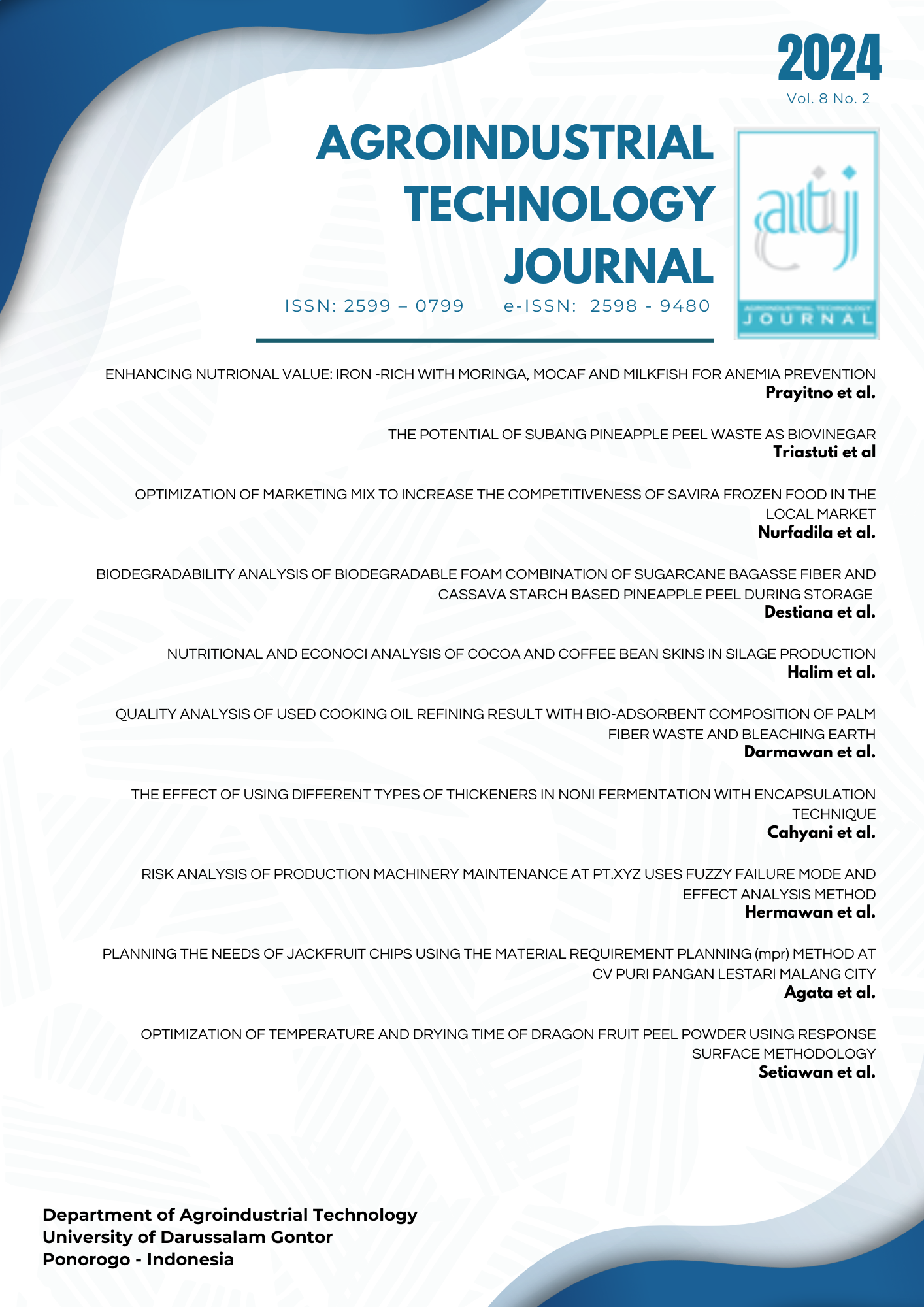
The Effect Of Using Different Types Of Thickeners In Noni Fermentation With Encapsulation Technique
Keywords:
Encapsulation, Noni, ProximateAbstract
Noni is famous for its rich health benefits due to its anti-oncide content, anti-inflamation, and immunomodulatory properties. However, noni is not liked by many people because of its unpleasant taste and aroma so that it becomes an obstacle in its widespread use. Fermentation and Encapsulation techniques on noni are new solutions and innovations to reduce unpleasant tastes and improve the stability of their active compounds during storage and consumption. The objectives of the research are: 1) Making noni fermentation encapsulation and 2) Proximate Test (Protein, carbohydrate, ash and moisture content).The research method includes: 1) producing fermented noni fruit using the encapsulation method, and 2) conducting a Proximate Test. The research design utilizes a Completely Randomized Design (CRD) with a single factor by comparing the effects of noni fermentation and different types of thickeners, namely maltodextrin, xanthan gum, and gelatin, in a 1:2 ratio. Subsequent analysis is performed using SPSS and the BNT (Least Significant Difference) test to determine significant differences. The research findings show that (1) the type of thickener used has a significant effect on moisture content, protein, carbohydrate, and yield; (2) encapsulated fermented noni fruit has a better shelf life compared to liquid fermentation; (3) the lowest moisture content was achieved using maltodextrin as a thickener 9.2%, the highest carbohydrate content with maltodextrin 88.2%, the highest protein content with gelatin 1.6%, the highest ash content with xanthan gum 1.8%, and the highest yield with xanthan gum 0.35%.
References
Anggela. (2023). Optimization of Sensory Characteristics to Proportions the Composite Flour from Soluble Fiber and Gelatin on the Quality of Kerapu’s Fishtball Properties.Agroindustrial Technology Journal Vol.7 No.2 (2023).Asri D, Dan A, Wibowo AA. (2021). Encapsulation Technology: Techniques and Applications. Separation Technology. 2021 Jun 17;7(2):202–9. Budi Yuliyati T, Cahyono E, Nanik Wijayati Department of Chemistry and, Mathematics and Natural Sciences F. Indonesian Journal of Chemical Science Encapsulation of Basil Oil (Ocimum basilicum) in Maltodextrin and β-cyclodextrin. Vol. 9, J. Chem. Sci. 2020.Cui. 2000. Polysaccharide Gums from Agricultural Products: Processing, Structures and Functionality. CRC PressGarcia F, OVE Santos, JA Casas, E. GoÂmez. (2000). Xanthan Gum: Production, Recovery and Properties. Biotechnology Advances 18 (2000) 549 579 Lee, B. Xanthan Gum Purified by Recovery with Ethanol GRAS Notification.Husnul Khotimah, Sutiono.(2014). Financial Feasibility Analysis of Bamboo Cultivation Business. Forestry Science. 2014;8(1):14–24.Kurniawan L. (2019). Designing Standard Operating Procedure (SOP) for Production at Cashcow. Vol. 4, PERFORMA: Journal of Management and Business Start-Up. 2019.Nadiah, SS. Noorlaila Ahmad, Mohd Zahid Abidin, Norziah Mohd Hani and Normah Ismail. (2013). Optimization of Hydrocolloids and Maltodextrein Additional on Rossele-based Fruit Leather using Two-Level Full Factorial Design. International journal of Bioscience, Bichemistics and Bioformatics, Vol 3, No 4, July 2013.Laksmi A, Nia Rachmadita R, Rina Sandora. (2020). Study of Design and Manufacturing Engineering P, Ship Machinery Engineering J, Surabaya State Shipbuilding P, et al. Survival Knife Production Process Design with Operation Process Chart Method in Manufacturing Company. 2020.Nadine Nasya Riesta, I wayan Widia, I Gst Ketut Arya Arthawan.(2022). View of Production Planning Method and Raw Material Inventory Control to Minimize Potato Chips Production Costs (Case Study at CV. Lima Roti Dua Ikan). Beta Journal (Biosystems and Agricultural Engineering). 2022;10(2):244–52.Nisa Masruroh.(2020). Analysis of Production Scheduling Using the CDS Method. UPN Veteran Journal. 2020;2(1):158–71.Oktavi RA, Cahyono B, Suzery M. (2020). Encapsulation of Anthocyanin Extract from Rosella Flowers (Hibiscus Sabdariffa L.) With Coating Variations. Indonesian Chemical Act. 2020 Dec 1;5(2):86.Rizki, FM. 2002. Studying the Effect of Hydrocolloid Addition and Storage Time on the Physicochemical Properties and Acceptability of Low Calorie Jam from Noni Fruit (Morinda citrifolia). Thesis. Department of Community Nutrition and Family Resources. Faculty of Agriculture. IPBPrayitno, S.A., Elfira Octaviani and Muhammad Khoirunniam. (2024).TheEffectofMoringaLeavesConcentration on TheChemicalProperties of Mango Jam.Agroindustrial Technology Journal Vol.8 No.1 (2024).Ramadhan, Ahmad Fityan, Maya Sariand Anis Asmediana. (2018). The Effectiveness Of Addition Rosella Flower Calyx Extract (Hibiscus sabdariffa. L) To Antioxidant Activity In Aloe Vera Drink. Agroindustrial Technology Journal 02 (02) (2018).Ramadhan K, Atmaka W, and Widowati E. (2015). Study of the effect of variations in the addition of xanthan gum on the physical, chemical and organoleptic properties of super red dragon fruit (Hylocereus costaricensis) fruit leather. Journal of Agricultural Product Technology, Vol. VIII, No. 2: 115-122.Rosida DF, Djajati S, Dwi N, P. (2020). Antioxidant Activity of Noni Powder (Morinda Citrifolia L) with Filler Maltodextrin Kimpul (Xanthosoma sagittifolium). Journal of Food Technology. 2020;88(2).Rensia RHL, Diah Puspawati G, Mayun Permana D. (2023). The Effect of Maltodextrin and Gum Arabic Ratio on Antioxidant Activity and Color of Dutch Eggplant Powder (Solanum betaceum Cav) Copigmented. Itepa Journal. 12(2):2023–278.Sucianti, Nurhaeni, Hardi J.(2020).Microencapsulation of Super Red Dragon Fruit Peel Extract (Hylocereus costaricensis) in Various Maltodextrin Masses and Its Application as an Antioxidant. COVALEN: Journal of Chemical Research. 2020 Dec 30;6(3):191–7.Setiawan AP, Kumalaningsih S, Wignyanto W.(2020). The Encapsulation of Noni Fruit using Foam Mat Drying Method. Industria: Journal of Agro-Industry Technology and Management. 2020 Aug 3;9(2):91–8.
Downloads
Submitted
Published
How to Cite
Issue
Section
License
Copyright (c) 2024 The Author (s)

This work is licensed under a Creative Commons Attribution-NonCommercial-ShareAlike 4.0 International License.
The author whose published manuscript approved the following provisions:
1. The right of publication of all material published in the journal / published in the Agroindustrial Technology Journal is held by the editorial board with the knowledge of the author (moral rights remain the author of the script).
2. The formal legal provisions for access to digital articles of this electronic journal are subject to the terms of the Creative Commons Attribution-NonCommercial-ShareAlike 4.0 International License (CC BY-NC-SA 4.0), which means that Agroindustrial Technology Journal reserves the right to save, transmit media or format, Database), maintain, and publish articles without requesting permission from the Author as long as it keeps the Author's name as the owner of Copyright.
3. Printed and electronically published manuscripts are open access for educational, research and library purposes. In addition to these objectives, the editorial board shall not be liable for violations of copyright law.