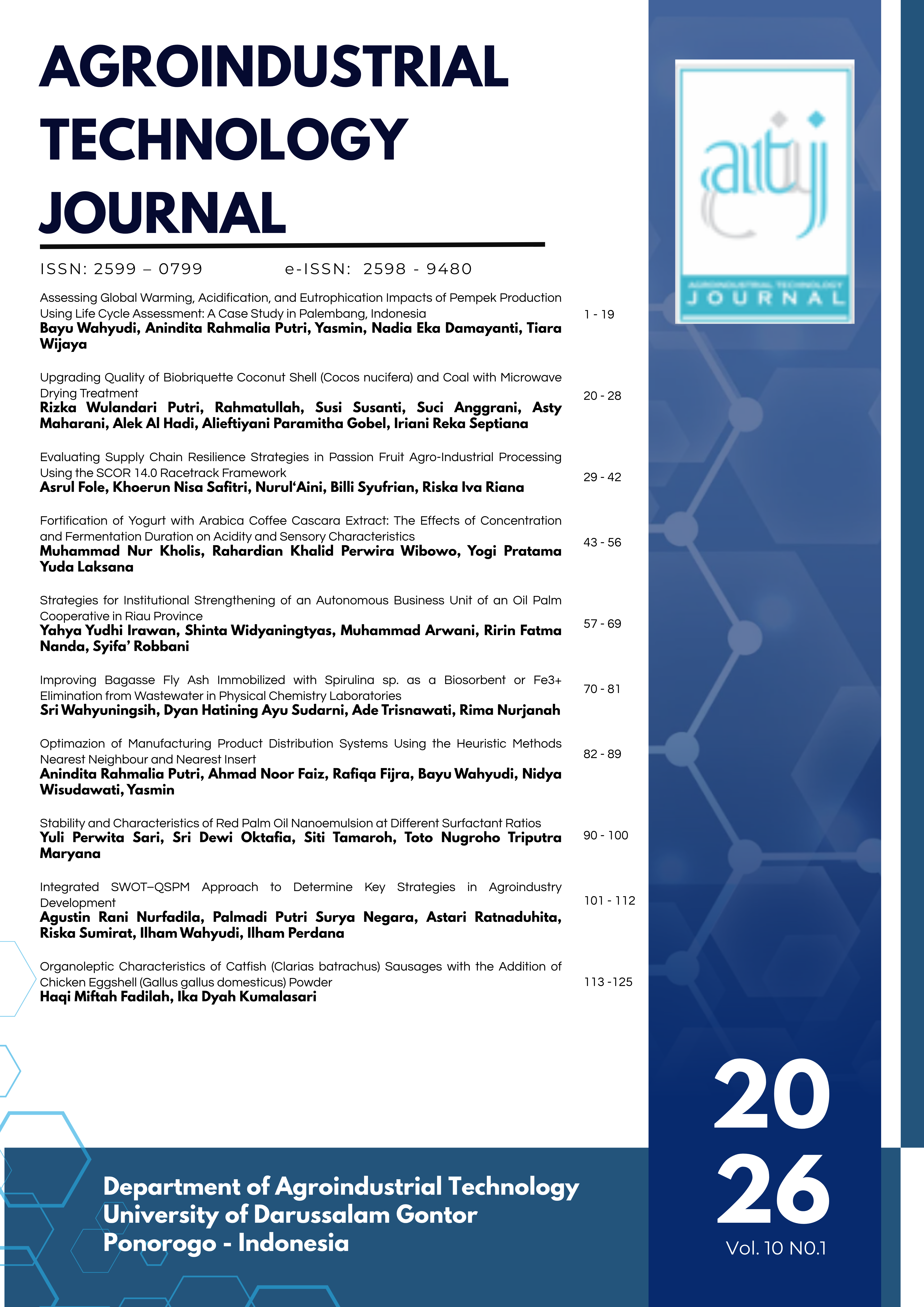
Organoleptic Characteristics of Catfish (Clarias batrachus) Sausages with the Addition of Chicken Eggshell (Gallus gallus domesticus) Powder
DOI:
https://doi.org/10.21111/atj.v10i1.20Keywords:
catfish sausage, eggshell powder fortification, calcium enrichment, sensory evaluation, consumer preferenceAbstract
Catfish (Clarias batrachus) sausage is a fish-based processed product with potential to be developed as a value-added and calcium-fortified food. Chicken eggshell (Gallus gallus domesticus) powder is a poultry by-product with high calcium content that can be utilized as an alternative calcium source. However, its incorporation may affect the sensory quality of food products; therefore, organoleptic evaluation is required to determine consumer acceptance. This study aimed to evaluate the effect of eggshell powder addition on the organoleptic characteristics of catfish sausage and to determine the most acceptable formulation. A Completely Randomized Design (CRD) with a single factor, namely the level of eggshell powder addition, was applied with four formulations: F0 (0%), F1 (10%), F2 (20%), and F3 (30%). Organoleptic evaluation was conducted using hedonic and descriptive tests involving 30 untrained panelists. The parameters assessed included color, smell, texture, taste, aftertaste, and overall acceptability. Data were analyzed using one-way analysis of variance (ANOVA) followed by Duncan’s Multiple Range Test at a 95% confidence level. The results showed that increasing levels of eggshell powder significantly decreased sensory preference scores (p < 0.05), particularly for texture, taste, and aftertaste, due to the development of a gritty mouthfeel. Among the fortified formulations, F1 showed the most favorable balance between sensory acceptability and calcium enrichment with an overall hedonic score of 3.80 ± 0.76, while F0 had the highest overall sensory score (4.30 ± 0.59). In conclusion, the addition of 10% eggshell powder (F1) is recommended as the optimal formulation for producing calcium-fortified catfish sausage with acceptable sensory quality. The use of eggshell powder also offers a sustainable and cost-effective calcium source, supporting the valorization of poultry waste into functional food products.
References
Afriani, K., Permana, A. H., Widiana, I., Agustin, P. A., Nurhalisa, I. A., & Az Zahro, H. (2022). Pembuatan Aneka Produk Olahan Pangan Berbahan Dasar Ikan Lele. Jurnal Pengabdian Masyarakat Aka, 2(1), 30–34.
Apsari Pebrianti, S., Muhamad Ilyas, F., Teknologi Pangan Dan Hasil Pertanian, J., Pertanian, F., Siliwangi, U., & Jawa Barat, T. (2024). Pemanfaatan Hasil Samping Cangkang Telur Untuk Fortifikasi Kalsium Pada Berbagai Produk Pangan. Journal Of Food And Agricultural Product, 4(1), 8–18.
Brun, L. R., Lupo, M., Delorenzi, D. A., Di Loreto, V. E., & Rigalli, A. (2013). Chicken Eggshell As Suitable Calcium Source At Home. International Journal Of Food Sciences And Nutrition, 64(6), 740–743.
Chaerunnimah, C., Amir, A., Lestari, R. S., & Adam, A. (2021). Analisis Zat Gizi Dan Organoleptik Olahan Sosis Ikan Gabus Sebagai Pangan Alternatif Mencegah Stunting. Jurnal Kesehatan Manarang, 7(2), 130.
Chilek, T. Z. T., Kairuaman, N. A., Ahmad, F., Wahab, R. A., Zamri, A. I., & Mahmood, A. (2018). Development Of White Bread Fortified With Calcium Derived From Eggshell Powder. Malaysian Applied Biology, 47(6), 29–39.
Ervira Puspaningtyas, D. (2019). Analisis Potensi Prebiotik Growol: Kajian Berdasarkan Perubahan Karbohidrat Pangan. Journal Of The Indonesian Nutrition Association, 42(2), 83–90.
Fadhlurrohman, I., Rahman, M. H., Viani, R. O., & Aisya, E. N. (2024). Inovasi Pangan Fungsional Berbasis Sosis Fermentasi Dengan Pemanfaatan Berbagai Jenis Bakteri. September, 651–662.
Santoso, S., Yanti, W. S., & Deni, R. (2019). Pengolahan Ikan Lele Menjadi Nugget Sehat Untuk Menumbuhkan Kreativitas Masyarakat Dalam Berwirausaha. Jurnal Abdikarya : Jurnal Karya Pengabdian Dosen Dan Mahasiswa, 3(03), 218–221.
Silsia, D. S., Sidebang, B., & Silalahi, A. P. (2025). Effects of maltodextrin on sensory characteristics of calamansi peel-based green tea. Agroindustrial Technology Journal, 9(1), 55–65.
Kumalasari, I. D., & Khairunnisa, H. L. (2024). The analysis of the sensory acceptance of cookies made from almond flour (Prunus dulcis) and sweet corn flour (Zea mays saccharata Sturt). Agroindustrial Technology Journal, 8, 77-87.
Kumalasari, I. D., & Widiyanti, A. (2024). Karakteristik Fisiko-Kimia Dan Organoleptik Sosis Analog Tepung Kacang Hijau ( Vigna Radiata ) Dan Tepung Sukun ( Artocarpus Altilis ) Physico-Chemical And Organoleptic Characteristics Of Sausage Analogues Of Mung Bean Flour ( Vigna Radiata ) And Breadfruit Flour ( Artocarpus Altilis ). 12(2), 138–150.
Rizkuna, A., Atmomarsono, U., & Sunarti, D. (2014). Evaluasi Pertumbuhan Tulang Ayam Kampung Umur 0-6 Minggu Dengan Taraf Protein Dan Suplementasi Lisin Dalam Ransum (Evaluation Of Bone Growth Of 0-6 Week Old Native Chicken With Different Levels Of Dietary Protein And Lysine Supplementation In The Ration). Jurnal Ilmu Teknologi Dan Peternakan, 3(3), 121–125.
Yusmiati, S. N. H., & Erni, E. (2017). Pemeriksaan Kadar Kalsium Pada Masyarakat Dengan Pola Makan Vegetarian. Jurnal Sainhealth, 1(1), 43.
Yonata, D., Yonata, S., Aminah, S., & Hersoelistyorini, W. (2017). Kadar Kalsium Dan Karakteristik Fisik Tepung Cangkang Telur Unggas Dengan Perendaman Berbagai Pelarut. Jurnal Pangan Dan Gizi, 7(2), 82–93.
Dewi, I. R. (2019). Kekurangan Kalsium Menyebabkan Osteoporosis Abstrak. Jurnal Kebidanan Besurek, 9–14
Hayati, S., & Herwana, E. (2018). Peningkatan Asupan Kalsium Menghambat Penurunan Kepadatan Tulang Pada Perempuan Pascamenopause. Jurnal Biomedika Dan Kesehatan, 1(2), 145–151.
Salsa., Margawati, A. (2016). Hubungan Asupan Gizi Makro Dan Mikro Sebagai Faktor Risiko Stunting Anak Usia 2-5 Tahun Di Semarang. Medical Hospital, 4((1)), 45–50.
Ferilda, S., & Marsellinda, E. (2023). Hubungan Asupan Kalsium Dan Vitamin D Pada Anak Stunting Dan Tidak Stunting Usia 12-59 Bulan Di Kabupaten Sijunjung. Medfarm: Jurnal Farmasi Dan Kesehatan, 12(2), 202–208.
Farmasetika, M., Penelitian, A., Rustiani, E., Muthia, D., Zulkarnaen, Z., Andini, S., Farmasi, P. S., Matematika, F., Pengetahuan, I., Pakuan, U., & Barat, J. (2024). Formulasi Tablet Kunyah Kombinasi Tepung Cangkang Telur Dan Ekstrak Daun Kelor ( Moringa Oleifera L.). 9(Suppl 1), 83–96.
Qolis, N., Handayani, C. B., Asmoro, N. W., & . A. (2020). Fortifikasi Kalsium Pada Kerupuk Dengan Subtitusi Tepung Cangkang Telur Ayam Ras. Jurnal Teknologi Pangan, 14(1).
Istikomah, P., Rahayu, N., Rohmaniyah, F., Ratna Sari, C., Cahya Rahmatika, V., & Dewi Noviyanti, R. (2023). Analisis Uji Organoleptik, Kalsium, Dan Antioksidan Bubur Cangkang Telur Substitusi Ekstra Jahe Sebagai Alternatif Peningkat Imunitas. Profesi (Profesional Islam) : Media Publikasi Penelitian, 20(2), 133–138.
Purba, Z. E., Ekawati, I. G. A., & Permana, I. D. G. M. (2022). Pengaruh Penambahan Angkak Terhadap Karakteristik Sosis Ikan Lele (Clarias Gariepinus) Selama Penyimpanan. Jurnal Ilmu Dan Teknologi Pangan (Itepa), 11(2), 188.
Bernadeta, Ardiningsih, P., & Silalahi, I. H. (2022). Penentuan Kondisi Optimum Hidrolisat Protein Dari Limbah Ikan Ekor Kuning (Caesio Cuning) Berdasarkan Karakteristik Organoleptik. Jurnal Kimia Khatulistiwa, 1(1), 26–30.
Widjanarko, S., Zubaidah, E., & Muzaky Kusuma, A. (2022). Studi Kualitas Fisik-Kimiawi Dan Organoleptik Sosis Ikan Lele Dumbo ( C Larias Gariepinus ) Akibat Pengaruh Perebusan , Pengukusan. 4(3), 193–202.
Olomia, K. Y., Rachman, B. A., & Sanam, We. R. (2024). Pemanfaatan Tepung Cangkang Telur Ayam Dalam Pengembangan Cookies Sorgum Yang Tinggi Kalsium. Jambura Journal Of Food Technology, 6.
Ayu Rahmawati, W., Choirun Nisa, F., Teknologi Hasil Pertanian, J., Universitas Brawijaya Malang Jl Veteran, F., & Korespondensi, P. (2015). Fortifikasi Kalsium Cangkang Telur Pada Cookies-Rahmawati, Dkk. Jurnal Pangan Dan Agroindustri, 3(3), 1050–1061.
Downloads
Submitted
Accepted
Published
How to Cite
Issue
Section
License
Copyright (c) 2026 Agroindustrial Technology Journal

This work is licensed under a Creative Commons Attribution-NonCommercial-ShareAlike 4.0 International License.
The author whose published manuscript approved the following provisions:
1. The right of publication of all material published in the journal / published in the Agroindustrial Technology Journal is held by the editorial board with the knowledge of the author (moral rights remain the author of the script).
2. The formal legal provisions for access to digital articles of this electronic journal are subject to the terms of the Creative Commons Attribution-NonCommercial-ShareAlike 4.0 International License (CC BY-NC-SA 4.0), which means that Agroindustrial Technology Journal reserves the right to save, transmit media or format, Database), maintain, and publish articles without requesting permission from the Author as long as it keeps the Author's name as the owner of Copyright.
3. Printed and electronically published manuscripts are open access for educational, research and library purposes. In addition to these objectives, the editorial board shall not be liable for violations of copyright law.