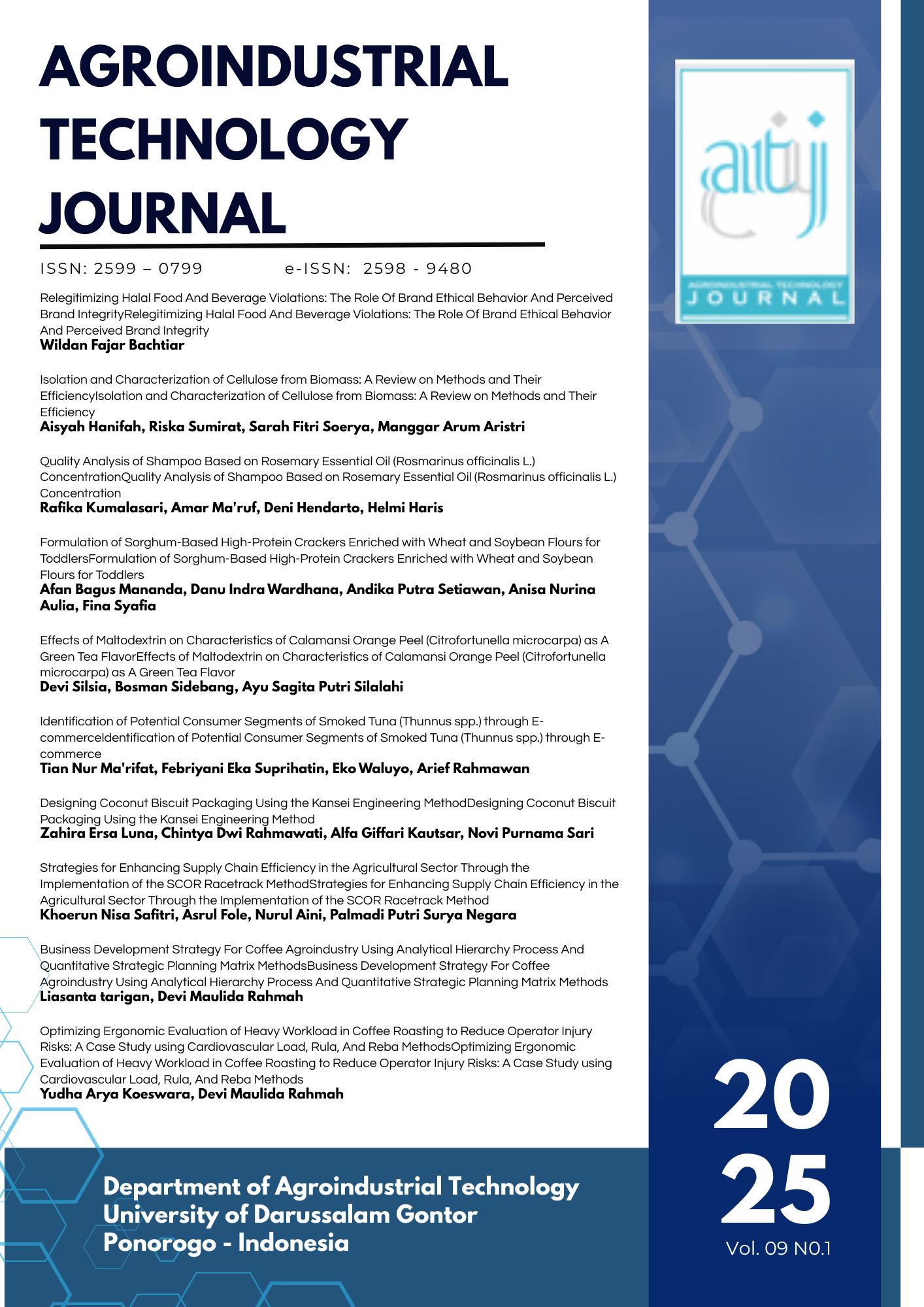
Relegitimizing Halal Food and Beverage Violations: The Role of Brand Ethical Behavior and Perceived Brand Integrity
Keywords:
Brand Ethical Behavior, Consumer trust, Halal Legitimacy Perceived Brand Integrity, RelegitimizationAbstract
This study investigates the relegitimization process for halal food and beverage brands following violations, emphasizing the roles of brand ethical behavior and perceived brand integrity. Using a systematic literature review of 40 relevant articles, the research highlights the challenges faced by brands in rebuilding consumer trust and ensuring compliance with Islamic dietary laws. The findings underscore that halal legitimacy extends beyond regulatory compliance, encompassing ethical transparency and adherence to religious principles, which are essential for consumer trust. The study proposes a conceptual framework illustrating how brand ethical behavior directly enhances halal legitimacy while being mediated by perceived brand integrity. This dual influence emphasizes the need for a holistic strategy, combining ethical actions with efforts to strengthen consumer perceptions of integrity. The insights presented contribute to understanding relegitimization in halal markets and provide actionable guidance for brands aiming to regain consumer confidence and maintain market competitiveness. Future research should empirically validate this framework and explore the cultural nuances influencing the relegitimization process.
References
Abduh, M., & Bastian, E. (2024). The law enforcement of guarantees halal products in Indonesia. Muamalatuna.
Akim, V., Puspita, S., Konety, N., & Nidatya, N. (2024). Indonesia’s global halal hub: Competitive strategies for leadership. Global Strategis, 18(1), 30.
Amani, D. (2024). The mediating effects of perceived brand integrity on brand ethical behavior and corporate brand legitimacy in halal cosmetics. Journal of Islamic Marketing, 15(6), 1461–1478. https://doi.org/10.1108/JIMA-04-2020-0109
Basoni, S. (2023, June 12). Pelayan sajikan pasta babi ke Muslim, restoran Mamma Rosy klarifikasi begini. Detik Food. https://food.detik.com/info-kuliner/d-6768406/pelayan-sajikan-pasta-babi-ke-muslim-restoran-mamma-rosy-klarifikasi-begini
Butt, M. M., Khong, K. W., & Alam, M. (2020). Managing corporate brand behavioural integrity: A case of alleged violation of halal certification. Journal of Islamic Marketing, 12(6). https://doi.org/10.1108/JIMA-04-2020-0109
Cambier, F., & Poncin, I. (2020). Inferring brand integrity from marketing communications: The effects of brand transparency signals in a consumer empowerment context. Journal of Business Research, 109. https://doi.org/10.1016/j.jbusres.2019.11.060
Deng, H., Wang, W., & Lim, K. H. (2022). Repairing integrity-based trust violations in ascription disputes for potential e-commerce customers. MIS Quarterly: Management Information Systems, 46(4). https://doi.org/10.25300/MISQ/2022/15679
Hassan, M. H. C., & Osman, L. H. (2024). Improving integrity halal supplier in food supply chain: Scoping review. Journal of Technology and Operations Management, 19(1), 24–39. https://doi.org/10.32890/JTOM2024.19.1.3
Jubaedah, D., Nor, M. R. M., Taeali, A., Putra, H. M., Jauhari, M. A., & Aniq, A. F. (2023). Halal certification in Indonesia: Study of Law Number 6 of 2023 on job creation. Jurisdictie: Jurnal Hukum dan Syariah, 14(1). https://doi.org/10.18860/J.V14i1.19948
Karyani, E., Geraldina, I., Haque, M. G., & Zahir, A. (2024). Intention to adopt a blockchain-based halal certification: Indonesia consumers and regulatory perspective. Journal of Islamic Marketing, 15(7), 1766–1782. https://doi.org/10.1108/JIMA-03-2023-0069
Kurniati, P., & Atiqah, N. (2021). Tinjauan etika dan governance pada bisnis halal di Indonesia. JAAKFE Untan (Jurnal Audit dan Akuntansi Fakultas Ekonomi Universitas Tanjungpura, 10(2). https://doi.org/10.26418/JAAKFE.V10i2.50971
Kusuma, R. A. (2023). Bibliometric analysis of food and post-harvest research in enhancing the integrity of halal food industry. Agroindustrial Technology Journal, 7(2). https://doi.org/10.21111/ATJ.V7i2.9409
Kusumastuti, D., Raharja, M. C., Maamor, S., & Yulian, T. N. (2024). Multidimensional trust in halal logo of food products: A study in local cultural context. Ijtimāʿiyya Journal of Muslim Society Research, 9(1), 15–36. https://doi.org/10.24090/Ijtimaiyya.V9i1.10740
Lopes, E. L., Yunes, L. Z., Bandeira De Lamônica Freire, O., Herrero, E., & Contreras Pinochet, L. H. (2020). The role of ethical problems related to a brand in the purchasing decision process: An analysis of the moderating effect of complexity of purchase and mediation of perceived social risk. Journal of Retailing and Consumer Services, 53. https://doi.org/10.1016/J.Jretconser.2019.101970
Madun, A., Kamarulzaman, Y., & Abdullah, N. (2022). The mediating role of consumer satisfaction in enhancing loyalty towards Malaysian halal-certified food and beverages. Online Journal of Islamic Management and Finance, 2(1). https://doi.org/10.22452/OJIMF.Vol2no1.1
Maemunah, S., & Syakbani, B. (2021). Strategic logistics on halal products. Valid: Jurnal Ilmiah, 18(2). https://doi.org/10.53512/Valid.V18i2.177
Ma’rifat, T. N., Purwanto, S., & Windarwati, S. (2017). Perception on halal traceability on chicken meat supply chain. Agroindustrial Technology Journal, 1(1).
Mardiyansyah, K. Viral influencer makan kerupuk babi di restoran halal, pengelola langsung hancurkan semua peralatan makan. [diakses pada 20 Mei 2025]. Tersedia dari: https://nasional.okezone.com/read/2023/07/19/337/2849019/viral-influencer-makan-kerupuk-babi-di-restoran-halal-pengelola-langsung-hancurkan-semua-peralatan-makan
Marnita, M. (2024). Directions for the development of the halal ecosystem in public policy: A study of Islamic law and legislation in Indonesia. Al-Ishlah: Jurnal Ilmiah Hukum, 27(2), 156–177. https://doi.org/10.56087/AIJIH.V27i2.477
Masruroh, N. (2020). The competitiveness of Indonesian halal food exports in global market competition industry. Economica: Jurnal Ekonomi Islam, 11(1). https://doi.org/10.21580/Economica.2020.11.1.3709
Maulana, D. F., Makhrus, & Hasanah, H. (2022). The urgency of MUI halal fatwa about food, beverage, medicine, and cosmetic products for consumer protection. Volksgeist: Jurnal Ilmu Hukum dan Konstitusi, 5(2). https://doi.org/10.24090/Volksgeist.V5i2.6421
Nasution, E. N., & Asmuni, Z. (2024). Regulation and implementation of halal certification in Indonesian fashion products (An analytical study of Law No. 33 of 2014 on Halal Product Assurance). Pena Justisia: Media Komunikasi dan Kajian Hukum, 23(2).
Nugroho, A. A., Sumiyati, S., & Hamsani, H. (2024). Integrity and legitimacy of halal products: The urgency of halal supply chain management technology adoption in halal product authentication traceability evidence from Indonesia. The South East Asian Journal of Management, 18(1), 54–80. https://doi.org/10.21002/SEAM.V18i1.1485
Nugroho, A. J. S., Ihalauw, J. J. O. I., & Kristian, N. A. N. A. (2022). The moderating effect of trust and product involvement on antecedents of halal brands to purchase intention towards the competitiveness of the sharia economic system in Indonesia. Journal of System and Management Sciences, 12(5). https://doi.org/10.33168/JSMS.2022.0522
Pradana, W. Riset UGM: Banyak olahan daging halal di Jogja terkontaminasi oleh daging babi. [diakses pada 20 Mei 2025]. Tersedia dari: https://kumparan.com/pandangan-jogja/riset-ugm-banyak-olahan-daging-halal-di-jogja-terkontaminasi-oleh-daging-babi-1xWW4O7UjhI/full
Prihatno, E. N. A., Putra, T. S., Murti, D. C. W., & Fauzi, G. A. (2024). Menilik peran etika dalam hotel branding: Pengaruh consumer perceived ethicality terhadap citra merek dan komitmen merek. Modus, 36(1), 59–74.
Purborini, V. S. (2024). Study of halal certification for food and beverage products based on PP No. 39 of 2021. Jurnal Kajian Pendidikan Islam dan Keagamaan, 8(2), 123–134.
Purwaningsih, P., Mustika, D. A., & Purwoto, A. (2024). Addressing non-compliance with halal product regulations in Indonesia: Safeguarding Muslim consumer rights. Kanun Jurnal Ilmu Hukum, 26(2), 232–250. https://doi.org/10.24815/Kanun.V26i2.38402
Rahayu, S. A. P., Niravita, A., Anitasari, R. F., & Kamal, U. (2023). Halal certification imperatives for MSMEs: Navigating sustainability, consumer confidence, and policy compliance (Case of Kenteng, Bandungan, Indonesia). Indonesian Journal of Advocacy and Legal Services, 5(2). https://doi.org/10.15294/IJALS.V5i2.72426
Rohmah, D. U. M., Kholis, M. N., & Hafidz, A. (2022). Analisis halal supply chain management pada produk frozen food sosis (Studi kasus di Pawone Bu Wuni Ponorogo). Agroindustrial Technology Journal, 6(1). https://doi.org/10.21111/ATJ.V6i1.6874
Rohmah, D. U. M., Rahmawan, A., & Saputra, Y. W. (2022). Analisis proses penyembelihan ayam berdasarkan Halal Assurance System (HAS) 23103 (Studi kasus rumah potong ayam D’Jabung Ponorogo). Agroindustrial Technology Journal, 6(1). https://doi.org/10.21111/ATJ.V6i1.5030
Sadiyah, S., & Erawati, E. (2024). Effectiveness of halal traceability and self-declared certification on Indonesian MSMEs performance. Indonesian Journal of Islamic Economic Law, 1(2), 72–90. https://doi.org/10.23917/IJOEL.V1i2.4816
Santriadi, M. T., Asmediana, A., & Luketsi, W. P. (2020). Formulasi serta analisis fisikokimia dan organoleptik tahu sebagai bahan tambahan dalam pembuatan brownies kukus. Agroindustrial Technology Journal, 4(2). https://doi.org/10.21111/ATJ.V4i2.4991
Sholeh, M., & Mursidi, A. (2023). Implementation culture certified of halal food in Indonesia. El-Hekam, 8(1). https://doi.org/10.31958/JEH.V8i1.9525
Voak, A. (2021). Fake: The rise of food fraud in the halal supply chain. Nusantara Halal Journal (Halal Awareness, Opinion, Research, and Initiative), 2(2). https://doi.org/10.17977/UM060.2021V2P082-088
Yang, J., & Battocchio, A. F. (2021). Effects of transparent brand communication on perceived brand authenticity and consumer responses. Journal of Product and Brand Management, 30(8). https://doi.org/10.1108/JPBM-03-2020-2803
Yener, D. (2022). The effects of halal certification and product features on consumer behavior: A scenario-based experiment. International Journal of Management Studies, 29(2), 101-136
Downloads
Submitted
Published
How to Cite
Issue
Section
License
Copyright (c) 2026 Agroindustrial Technology Journal

This work is licensed under a Creative Commons Attribution-NonCommercial-ShareAlike 4.0 International License.
The author whose published manuscript approved the following provisions:
1. The right of publication of all material published in the journal / published in the Agroindustrial Technology Journal is held by the editorial board with the knowledge of the author (moral rights remain the author of the script).
2. The formal legal provisions for access to digital articles of this electronic journal are subject to the terms of the Creative Commons Attribution-NonCommercial-ShareAlike 4.0 International License (CC BY-NC-SA 4.0), which means that Agroindustrial Technology Journal reserves the right to save, transmit media or format, Database), maintain, and publish articles without requesting permission from the Author as long as it keeps the Author's name as the owner of Copyright.
3. Printed and electronically published manuscripts are open access for educational, research and library purposes. In addition to these objectives, the editorial board shall not be liable for violations of copyright law.